 S4E33
S4E33
· 26:36
Alex Usher: Hi, everyone. I'm Alex Usher, and this is the World of Higher Education podcast.
It's hard to think of a higher education system that has changed more dramatically over the past half-century than China's. In the space of just two generations, the country's gone from the chaos of the Cultural Revolution to building one of the world's largest and most influential university systems, complete with world-class research institutions and mass participation.
It's achieved all this while at the same time working with a system and institutional culture that's quite different from that of most Western universities. It has a distinctive approach to governance, a highly centralized administration system built around the Gaokao exam, and an increasingly strategic focus on aligning higher education with national economic and technological priorities.
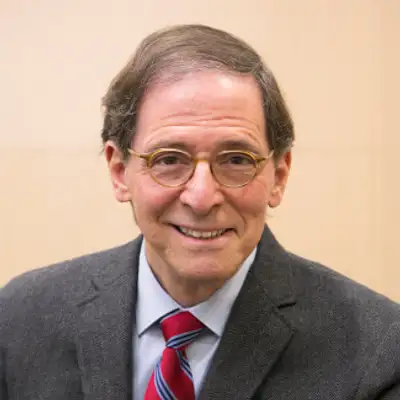
With me today to discuss all of this is Gerald Postiglione. He's professor emeritus at the University of Hong Kong. He's one of the leading experts on Chinese higher education. He's also just written a book called, wait for it, Higher Education in China, published by Johns Hopkins Press. His book is not only a good history of the last half-century, it's also an excellent guide to the key challenges that currently face the system: meeting the skill needs of the new economy, improving student equity, and getting university governance right. It also contains, by the way, one of the most informative pieces I've ever read about the Hong Kong higher education system and how it acts with that of the rest of China.
I don't want to give anything away here, so without further ado, let's turn things over to Gerry.
Gerry, it's May 2026. We're coming up on the 50th anniversary of the death of Mao Zedong in September of 1976. What was the higher education system like 50 years ago, and what were the big moments that have made it change since then?
Gerard Postiglione: Oh, that's a great question, Alex. You're obviously aging me. I was there forty-five years ago, so you probably think I'm five years older than I am. But let me say that it's a question which is often asked. That period before the death of Chairman Mao Zedong, which uh, was approximately nineteen sixty-six to seventy-six, the era referred to as the Cultural Revolution.
At that time, of course basically universities were closed for the first couple of years or so, and after that they were highly politicized. We could call it hyper-politicized until nineteen uh, seventy-eight, seventy-nine when Deng Xiaoping assumed the leadership, and there was a depoliticization of the universities, and that was the period of reform and opening, which over the next forty years or so the country went from eighty-eight percent poverty rate to zero percent poverty rate, or technically zero, depending upon how you measure it.
So there was a tremendous amount of progress, and I had the advantage to being in the Chinese mainland every year from nineteen eighty-one all the way through to the present, observing first education in rural areas in the western regions of the country, basic education, and then gradually technical vocational education and then higher education.
I was at the Great Hall of the People when the President of China, President Jiang Zemin, announced on May fourth, nineteen ninety-eight, that China would build world-class universities. And of course, at that time, the rankings of world-class universities were moving in. And that was a turning point and a really interesting time to be in China.
Alex Usher: So it's under Jiang Zemin that you have the start of the, the 211 Excellence Project and the 985 Excellence Project, which was really the start of China's research dominance.
So why doesn't Jiang Zemin get the credit he often deserves for this?
Gerard Postiglione: Well, the presidents who followed Deng Xiaoping, Jiang Zemin, Hu Jintao, and of course, Xi Jinping in some ways uh, you could say they operated on the shoulders of Deng Xiaoping because Deng Xiaoping really opened the country and it was a, an extremely pivotal move that Deng made. He was a very good politician and knew when and how to bring the country into a trend of prosperity. So perhaps that's why. But of course, I mentioned Jiang Zemin several times in the book. And you're right that Deng basically restarted the Gaokao exam and put an emphasis on academic achievement.
And then, of course, Jiang Zemin made that announcement, which really made the nine eight five program of the thirty or so universities move ahead. Hu Jintao carried through the massification period, because in ninety-nine was really... I think you could say nineteen ninety-nine was an important part of the expansion.
So your question about President Jiang Zemin certainly he also very important, all of the ministries the central ministries had colleges and universities, so most of them did. And during his period was when the ministries, many of their colleges and universities were given to the provincial authorities, so it was kind of a decentralization.
The Ministry of Education kept a certain number of the very highly ranked universities, and the rest went down. And, and what also happened at that time was in order-- under Jiang Zemin, in order to achieve economies of scale, because most colleges had two thousand or three thousand students. Now they have fifty thousand, sixty thousand, seventy, eighty thousand. So, that was, well, in short, yes, Jiang Zemin deserves a lot of credit for his time as president in terms of his education policy. But each one of the former presidents had a major impact.
Alex Usher: So here's the thing. You know, people have noticed that in this growth period, Chinese universities don't look like Western universities. This has sort of come to everybody's attention that it's a different kind of model. Now, you work in Hong Kong, and many people have suggested that Hong Kong represents a kind of synthesis. It's where uh, universities of an Anglosphere background or Anglosphere connections, connect with Chinese universities. Is Hong Kong a synthesis? Like, is it easy to say it's a 50/50 or is something new? Like, is it something new that's growing up in Hong Kong right now?
Gerard Postiglione: Well, there has been amongst the academic community a very interesting discourse debate about the China model of higher education. And of course, from the academic perspective, it's much more cultural than political. But of course from the state's point of view, there's an important political dimension of the China model, and that goes back and forth.
But if you go to uni-- you go... Alex, I know you, you travel quite a bit in China and see the universities. They all have campuses and presidents and vice presidents for finance and student affairs, and they have departments and faculties and schools and the graduation kind of criteria and degrees of different kinds. So it operates in that sense very similarly to Western universities. For me, the one major difference is deference to authority. I think that's a major... that's a cultural and perhaps it's also-- it's cultural and political, I guess.
Now your question is about Hong Kong, and of course, Hong Kong has had its own traditions. The first university in nineteen eleven, and it was under the British administration. So obviously the culture of Hong Kong developed differently, and that's part of the reason, the culture and the economy, which is very important for China. There was a, a new constitution and sort of a sub-constitution for Hong Kong called the One Country, Two System Constitution.
So that makes Hong Kong's universities, they're much more Western or call it mainstream global in that respect. It's the German Anglo-American model there. And so, that's the difference.
Of course, we could go into that. It's certainly much more academically free than the mainland, much more internationally engaged, I think. You could argue about that, but certainly institutionally more autonomous, yeah.
Alex Usher: But certainly more attractive for Chinese universities to work with, right? Like they recognize that there's some Chineseness to the, the Hong Kong system, and that's why they're working together with Hong Kong University so much. I mean, one of the things I learned about in your book was this huge growth in cross-border cooperation to create the Greater Bay Area of, I guess they don't use the term higher education region, but that's really what it is.
Like how's that going? How did that come about and, you know, what have the results been of that cooperation?
Gerard Postiglione: Right. Well, I should say that since the reform and opening of approximately 1979, '80, right up to 1997 when the British administration ended, the universities in Hong Kong, and there were largely two of them for most of the time, my university, the University of Hong Kong, the Chinese University of Hong Kong, we were engaged from that time with the mainland universities.
We had all sorts of exchanges and programs, cooperation. Of course, not as much as now. So this is a trend. In fact, there's a book published on the University of Hong Kong and its engagement from 1979 to right through to 1997 in different fields. But what has happened, and, and this is partially because we have a new geopolitical background.
The global order from the unipolar to the multipolar, and, and we're still in process there. But the changing US-China relations put Hong Kong in a new position because for example, no more Fulbright program. Hong Kong previously had special policies with the US for trade and finance and commerce, and those were gone during the 2019, the 2020 protests and of course the 2020 new, the new national security law.
So this of course added to, supplemented, the integration was already going on, the integration of Hong Kong with the, what we call the Greater Bay, the Greater Bay Area, which is Southern Guangdong. And there, there's always, of course, movement and integration, but now it's sped up. It has sped up because of practical reasons, trade, finance, economy, because of course China has the second largest economy in the world right now, and Hong Kong is pivoting off of that economy and there's a lot happening every day on that.
So, to answer your question in short, yes Hong Kong's universities have become much more integrated with the rest of the higher ed system.
Alex Usher: We're gonna take a short break. We'll be right back.
And we're back. So, Gerry, in your book, you focus really on three, what you call fundamental areas, the areas that are gonna define the, the evolution of the system. And the first of those is skills, right? Can China get the skills mix of its system right?
And China has a reputation for being very aggressive about making sure skills are linked to the market, right? We're seeing it right now. We're seeing a lot of emphasis on AI. We're seeing a lot of emphasis on very future-oriented programs like the, low altitude economy and know, mind computer interface.
Pretty amazing stuff. And we're also seeing a lot of programs in the humanities being dismantled. I mean, it's interesting that China's made a very different bet on AI than the West is, I think. The West is saying humanities become more important in AI, and China seems to not think that's true, which that's an interesting question.
But do you think they're getting it right? Like, is this level of centralized decision-making about programs, is that likely to help or hinder the system?
Gerard Postiglione: Well, you know, I gotta unpack a little bit of what you said in terms of centralized, decentralized. The provinces do have their own decision rights to a pretty, pretty good extent. I mean, you know, the central government gives them these decision rights, but wants to measure their productivity, or how much income, or are they borrowing, are they able to pay back what they borrow?
And in terms of education, higher education universities, are they able to expand and also to change the curriculum and, and are they able to align with the provincial industries STEM industries, for example, and, you know, align with them and have, have you know, internships and so on.
But the whole point of the book was to say that the party central and the, the state council have promised kind of vowed to make China a leading education nation by twenty thirty-five, which is gonna come around pretty,
Alex Usher: Pretty soon.
Gerard Postiglione: Pretty soon. And I was trying to point out that I think there are three basic challenges in order to do that.
And I, I believe that they can overcome these challenges. The first one is the one you mentioned on skills. And one of the things that China has done extremely well, it's the top manufacturing nation in the world. It's great at manufacturing, not only because of the infrastructure in manufacturing and, and the whole country's infrastructure has done very well, including the higher education system, if you visit the universities, state-of-the-art educational technology and so on.
But the manufacturers have also-- they have a cookbook and know what-- how to use that equipment, whether they're talking about robots or whether they're talking about production targets. And you know, ninety-five percent of all the Apple phones were, were made, they're probably still made in China.
So they learn from a lot of these overseas companies investing in them. And the education system has those two-- They have the infrastructure, and they have the rule book on how to, produce students and measure their qualifications. But what manufacturing in China has, which is extremely valuable and not easy to get, is a process knowledge because they've worked on different kinds of manufacturing for so many years. They've made all the mistakes. They've learned gradually. The education system, the higher education system, the university expanded so rapidly. I mean, you look, they're up to sixty percent now, which is mass higher education. And they're, I think, still going through that phase of process knowledge.
Alex Usher: So Gerry, the second area you talk about is exams. It's access to higher education. You noted Deng Xiaoping had brought in the Gaokao, which was modeled on the imperial Keju exams, which go back thousands of years. Having really selective, really difficult, really selective exams, that was probably a good idea in 1978, where demand vastly exceeded supply and there wasn't much money to blow things up. So you wanna, you wanna have more students, you wanna have the best students in the very few places you have available.
Now you know, this is, it's a little bit different, right? Because now what you're getting is much more, I think, of a sorting mechanism for elite higher education. And so these top schools you know, I think it's becoming known that really the socioeconomic background of students in those C9 schools, the very top schools, it's pretty elite, right?
How do you create a system that supports the best but doesn't just support the children of the rich?
Gerard Postiglione: Well, it's, it's a hard nut to crack in two dimensions. One, of course as time goes on it's not as easy for rural students as it was in nineteen eighty, for example, for them to take the Gaokao and end up at the top universities. Now the economy is such that the middle class has an advantage. In fact, there's a great book by Jia Rui Xue and Li Hongbin, published by Harvard University Press this year, called The Highest Exam. And of course, they mention they themselves were rural students who managed to get into top-tier universities. Nowadays it's much more difficult. So that-- the equity issue is the first thing.
The second hard nut to crack is you've got one exam which still dominates access to higher education, the Gaokao. And educators in China know that it would be better to have a more diverse selection mechanism, especially because the country has moved strongly into the ideology of innovation, creativity, and that's what drives the vision of what drives the economy. That's not as easy to change.
But the reason the Gaokao-- and I, I kind of agree with this. If you let the Gaokao go and started to interview students and have different sorts of criteria, I think the system would be much more open to corruption than it is now.
And of course, you know, China's been dealing with corruption. It's a country that's developing very rapidly, and it will take quite a lot of time to get through that. So it's difficult. You know, it's, it's an autocratic system which also-- and a system with a heavy culture of the Keju exam which, you know, doesn't always encourage creativity, but at the same time, it wants to go in that direction.
So that's where it is today, I believe.
Alex Usher: Third area you talk about in the book is governance, and that one surprised me a little bit because, hey, this system's doing pretty well. It's grown, it's grown in quality, it's grown in size. What's wrong with governance in China? Why would you mess with something that seems to be working so well?
Gerard Postiglione: Well, I was pretty tough on governance, I think much more than I perhaps I was on the other two challenges of skills, creativity, and inequity. And, you know, part of the reason is I'm an academic. I'm a lifelong academic, and I worked in probably the most academically free university system in Asia.
Now, it has I, I think most academics in Hong Kong would agree that while it is still probably one of the most academically free compared to a lot of the systems in Asia, and particularly because Hong Kong is much more open than the Chinese mainland in terms of communication and internet and internationalization it has lost a little bit I think compared to pre-2020.
But still, it's a very vibrant system. There was a large number of academics and, and students who left 2021, 2022, '23, but that is-- it's kind of-- it's s- it's plateaued out now. And I mean, we've recruited three Nobel laureates in Hong Kong at my university alone. And even the mainland, the mainland recruited Giorgio uh, Marini, right? From uh, from Italy to I think Zhejiang University, a uh, Nobel physicist.
Alex Usher: I read the South China Morning Post every week, Gerry, and there's, there's not a week goes by where there's not a story about somebody famous coming to China or Hong Kong for universities. I mean, it's-- you're on a roll.
Gerard Postiglione: And of course, many of the Chinese scholars are returning from overseas, although the press emphasizes that much more than it would normally. And many of those academics are in the later part of their career. They wanna be near their families. Their mothers and fathers are older now, and they're in their 50s, their mothers and fathers in their 70s.
And working in Hong Kong isn't too much different than working in the West in, many ways. So it's a great place to recruit from, and I think we're very, very lucky from that point of view.
I'm a New Yorker by birth. I've been in, the Chinese mainland and Hong Kong for 45 years, and I've seen the system grow, and it's been absolutely remarkable.
I still carry, though, I carry those academic values from the West, which I, you know, I was born with and I grew up with. And I think say that the governance system in the Chinese mainland is, is fine the way it is now I don't think you would find many of the mainland academics, particularly in the social sciences and humanities completely satisfied.
Well, you, you'd find it where? In, in Canada where you are or down south in the United States, of course, it's the same situation. We're going through an era in which the whether it's the geopolitical turn or whatever that universities are more under fire. The academy itself is more under fire.
So call me a liberal academic, but you know, my basic points were that the academy has to remain vibrant, for it to be innovative and creative and to do that you need less bureaucracy and less kind of, if you have research grants should be given to competitively rather than for other reasons.
And so, to answer your question, maybe I was hard on the governance system because of the system that I myself carry as in terms of values, the values I carry as an academic. I'd like to see the system open more. I would like to see it open more. Yeah
Alex Usher: So let's look to the future here. I think it's pretty easy to see the, you know, the best case scenario if the, if the Chinese higher education system adopts some of the changes that you've recommended. But stick with me. You know, you could have a, a still growing participation rate. You could have better levels of research. You could have a more equitable system. You could have a more open system. But what's the worst case here, right? So imagine there's not enough money in the system to invest in, you know, high-tech skills the way that Xi Jinping wants. Let's imagine the Gaokao doesn't change and the top universities start to get the bad reputation that the Ivy League has for being elitist. Nothing changes in governance. What's the worst that could happen here? Could something actually break? Like, are there pressures building up in the system, or do we just end up with a Chinese higher education system that's a suboptimal version of its present self?
Gerard Postiglione: Well, that's an interesting question. I mean, if I were worried about anything in the higher education system going wrong or, or being a major obstacle to creating one of the best higher education systems in the world, it would be the misuse of artificial intelligence.
And I, I really don't think we have a good idea where we're going.
There's a big debate. On the one side, there, there are the doomsayers, and people like William Hinton, who knows more about AI, I think, than anyone else, and he's worried about a moratorium on it. And, if you speak to people at universities everywhere I mean, the US now is in Hong Kong and the Chinese mainland is concerned about the use of DeepSeek or ChatGPT uh, for students and so on. So, that's what I would worry about more than anything else.
I'm not really worried about government funding. China has the second largest economy in the world, and its budget is two hundred and fifty billion US dollars for higher education every year. Not so much worried about that.
Equity, I would be a little bit concerned because more equity and graduate unemployment are always an issue everywhere matter what country you're talking about. And a socialist country, of course, has to be more concerned with that. And so, I think that those issues would be on the horizon to look at.
And we need more exchanges, international, and China's open to that, of course. It wants to become a center for international research on science and technology. And I think given the state of the world right now, the divisions that exist between countries, universities have an advantage, I think, in terms of talking and discussing at the grassroots level and all the way up the system about what kind of world we want to live in or that the current generation wants to live in in the future.
Alex Usher: Gerry, thanks so much for being with us.
Gerard Postiglione: You're very welcome. And I look forward to seeing you again in Hong Kong. You were there. We met recently, a couple months ago, and I hope see you there again, Alex.
Alex Usher: I hope so.
Gerard Postiglione: All the best, and thank you very much.
Alex Usher: And it just remains for me to thank our excellent producers, Sam Pufek and Tiffany MacLennan, and you, our readers and listeners, for joining us. If you have any questions or comments about today's episodes or suggestions for future ones, please don't hesitate to get in contact with us at podcast@higheredstrategy.com.
Join us next week when our guest will be Javier Botero. He's a lead consultant at the World Bank and former Vice Minister of Higher Education in Colombia, and we'll be talking about the final days of the Gustavo Petro government in Colombia and the prospects for the higher education system after next weekend's elections. Bye for now.
Listen to The World of Higher Education using one of many popular podcasting apps or directories.