 S5E9
· 18:49
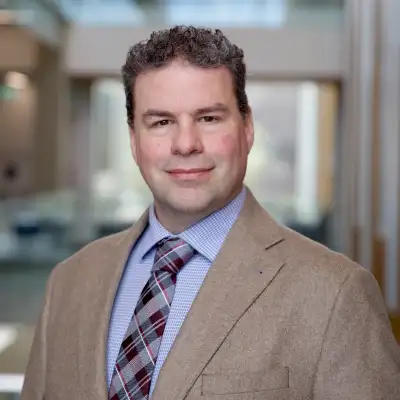
Alex Usher: Hi, everyone. I'm Alex Usher, and this is the World of Higher Education podcast.
In April 2023, fighting broke out in Khartoum between the governing Sudanese Armed Forces and the rebel Rapid Support Forces. Sudan's no stranger to civil wars, but earlier ones mostly were fought in the countryside. This one started in the capital, which is also where most of the country's universities are.
Since then, campuses have been looted, occupied, used as barracks, and shelled. Students and faculty scattered across Sudan and into Egypt, Saudi Arabia, the Gulf, and beyond. To keep going, many universities have moved to safer cities inside and outside the country and shifted all their teaching online, at least where there was internet and electricity.
Although the war is not yet over, the Sudanese Armed Forces retook Khartoum last year and subsequently ordered universities there to reopen their physical campuses. But that's easier said than done. Many professors have lost their homes. A full professor at the University of Khartoum now earns about $120 a month when universities can make the payroll. It's a struggle.
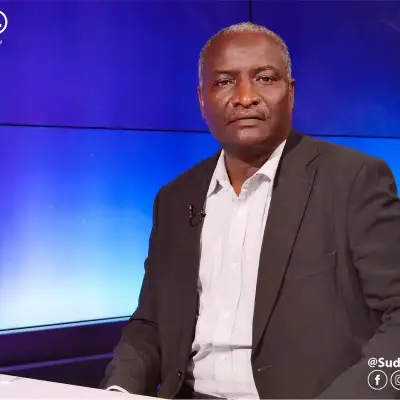
With me today to discuss university reconstruction in Sudan is Munzoul Assal. He's professor of social anthropology at the University of Khartoum. He was previously the university's dean of scientific research and director of its Peace Research Institute. He spent the war as a scholar at risk at the Christian Michelsen Institute in Bergen, Norway, where we spoke to him two weeks ago.
We talk about how Sudan's universities have survived the past three and a half years, what students and faculty have been through, the faculty strike over unpaid wages, and why he thinks recovery could take more than a decade. But enough from me. Let's listen to Munzoul.
Munzoul, welcome to the show. I wonder, could you give us a bit of an overview of the history of higher education in Sudan? So the system as it existed before, 2023, what distinguishes Sudan's higher education system from other African countries?
Munzoul Assal: Thank you, Alex. Sudan has one of the oldest higher education institutions in the continent, and the cornerstone of this was the University of Khartoum, which was established in 1956, evolving from the Gordon Memorial College. and of course, it trained generations of Sudanese political leaders, civil servants, doctors, engineers, and academics.
And what makes it somewhat unique is the rapid expansion of universities across the country, especially during the 1990s. Higher education was no longer concentrated in Khartoum because universities were established in almost every state.
This expanded access, but it also created a lot of problems and challenges.
Student numbers grew much faster than funding, infrastructure, and staffing. So before the current war, Sudan had a large and geographically diverse higher education system. But one that was already facing financial and quality-related pressures because with numbers came challenges, and with lack of funding, we ended up having a higher education that produces more or less low-quality graduates
Alex Usher: Right. So just in terms of numbers, how big was it? My recollection from doing statistical analysis back in the day was that Sudan had one of the largest systems in Africa. So how many students were there? How many universities were there?
Munzoul Assal: Well, we are talking about more than one million students and over 100 higher education institutions, including public and private universities and other colleges. So you're right, Sudan has you know, one of the most proliferating higher education sector in the continent. And one of the important feature was that there is some sort of a geographical distribution. Because it started in 1994 there were 26 universities in all the states in the country. And of course at the time, all these 26 universities were public universities, which faced funding problems, and this problem was persistent. The government support was actually insufficient all the time, forcing universities to depend increasingly on tuition fees and other income sources.
And in addition to these public universities, there are also a lot of other private universities and colleges. And so when the war erupted in 2023, it affected not a small sector, but one of the largest educational systems on the continent.
Alex Usher: Okay, so let's turn to that issue of the civil war, which is still ongoing even if the government forces control more of the country than they used to. What were the political and historical developments that led to the conflict between the Sudanese Armed Forces and the Rapid Support Forces?
Munzoul Assal: Well, this conflict is rooted in Sudan history and troubled political transition after the 2019 revolution that removed the former regime of President Bashir. So the, the factors are historical. Tensions between the Sudanese Armed Forces and Rapid Support Forces gradually intensify over questions of power sharing and military reform. And when the fighting broke out in April 2023, much of it took place in Khartoum. And this is unique because all the former wars took place in the countryside. This one happened right at the center of the country, the, the heart, the capital, Khartoum. And Khartoum happens to be the heart of Sudan's higher education because most higher education institutions, at least the old ones and the bigger ones, are found in Khartoum.
So the university were caught directly in the conflict. Campuses were damaged, occupied, looted and abandoned, of course, because faculty and student had to leave the capital. At the same time, students and professors tried to continue education, but that wasn't easy because university depend on people, infrastructure and stability, and the war disrupted all this simultaneously, which is why higher education and institutions have been so severely affected.
Alex Usher: Right. Well, I mean, presumably there were a range of strategies depending on how close and how violent the conflict was, right? So some universities presumably stayed open, some closed, some went online, some I understand moved to other countries. What were these different institutional strategies to try and keep themselves in business during all the disruption?
Munzoul Assal: Well, as you rightly said, the universities adopted different survival strategies. Some suspended operations completely because conditions were simply too dangerous. Others relocated to several cities within Sudan and tried to continue teaching there. Many institutions also shifted online, and this helped preserve some continuity. But Sudan's internet disruptions, electricity shortages, and widespread displacement made online learning very difficult.
Other universities established examination centers in neighboring countries, for instance, like Egypt, Saudi Arabia the UAE, for displaced students. Now, what is remarkable is the resilience shown by these institutions. Despite extraordinary circumstances, many universities actually tried to ensure that students did not lose entire years of studies.
Alex Usher: And so what did students do when they saw their institutions close or move abroad or move cities? Like, were they able to follow the institutions if they moved? What kind of challenges did students face in terms of being able to transfer their studies, particularly those who went to other countries to start at a new university? How did that work for them?
Munzoul Assal: Well, given the circumstances, the students have really shown remarkable determination. Many of them refused to give up on their education despite displacement, insecurity, and financial hardships. And some actually continued online, while others moved to safer parts of Sudan or crossed borders to continue studying from neighboring countries. But the challenges have been enormous, you know. And the students lost homes, they lost income, they lost their study materials, they lost access to campuses. Many also struggled with unreliable internet and uncertainty about examination and graduation.
There is also a psychological dimension of this. Many students have experienced traumas, loss, and displacement, yet they continue to view education as one of the few pathways to a better future. And actually, this is one of the things that gives us hope that amid this devastation, people are still determined. And this doesn't all apply to students, but even to the faculty who tried to teach online so that the students don't miss entire academic years.
Alex Usher: We're gonna take a short break. We'll be right back.
And we're back. Munzoul, you talked about the faculty there, and I think that's really important because of course there are you know, a lot of faculty left the country, and without faculty you don't really have a university. So did universities have to recruit new faculty?
Did they try and keep displaced faculty working in the institution remotely? What were the different kind of strategies there?
Munzoul Assal: Well, it wasn't easy to recruit new faculty because these universities were even unable to sustain paying salaries on a regular basis. But still the faculty tried to do work online, tried to teach online, tried to organize exams and tests online and all of that. And I think to a large extent, this was a successful experience despite the challenges that were part of, of the whole process.
Some universities actually because in Sudan there were some parts that were relatively peaceful, so we have like three or four universities that have never stopped.
Alex Usher: Right
Munzoul Assal: And these universities were sometimes used by the universities that were affected by war to do some admin and teaching work. So there is a combination of you know, inside the country, outside the country sort of, efforts plus trying to teach virtually.
Alex Usher: What's the physical state of campuses in Sudan after, you know, four years of war? I assume there are some institutions that are you know, maybe not easy to salvage very much from 'cause they've just been destroyed. But would that be true of many universities or just a few?
Munzoul Assal: Well, the devastation is really enormous, and most of these universities were physically damaged. But the, the, picture varies, of course. You know, overall, the damage is quite significant, especially in Khartoum. And many campuses actually experienced looting, vandalism, military occupation, or direct damage from fighting.
And, you know, some of these campuses were actually used as barracks by the warring parties. Laboratories, libraries, computers, and scientific equipment were affected. But the problem is that the loss goes far beyond buildings, you know.
Universities have lost research infrastructure, archives, and resources that took decades to, to build. So even where buildings can be repaired, restoring the academic environment will take much longer, you know, and requires substantial investment.
Alex Usher: And how likely is that investment to come? I mean, presumably in a post-war situation, you've got a government that first of all, can't raise the money that it used to, and second of all, probably doesn't view higher education as a top priority. So what's the timeline for reconstruction, do you think?
Munzoul Assal: Well, that is quite difficult because as long as the war continues, it would not be easy to put a timeline for that. Although the universities are now trying to reopen inside the country but the process proved to be quite complicated actually because you know, war is still raging and actually yesterday there were drone attacks on Khartoum. And as I just mentioned, many of these campuses were enormously damaged. They need repairs. Large number of students and faculty remain displaced, either inside Sudan or abroad. And while some institutions succeeded to resume classes and examinations the progress differs from one university to another.
And the key point is that reopening is a process, you know. It's not an event. So, the effects of displacement and damaged infrastructure and financial constraints will continue to slow the recovery, you know. And this is something that's gonna continue with us even after the war stops
Alex Usher: So last year the government retook Khartoum, and then earlier this year, I think it was in March, it ordered universities to reopen physical campuses. You know, as you say, it's, ... I think the government wanted it to be an event. As you say, it's a process. How's that process going? I mean, I would imagine the bottleneck is simply students and maybe more importantly faculty don't feel secure in Khartoum yet. Is that a fair assessment?
Munzoul Assal: Absolutely. And the, challenge is not not only about security, but even about the fact that substantial numbers of these faculty and students are still abroad, they are displaced.
Alex Usher: Ya.
Munzoul Assal: And most of faculty in the universities in Khartoum, they lose their homes.
Their homes are either bombed, or looted, you know. They lose their cars. They don't, they don't have anywhere to stay. Even if one is willing to come back, there's no place to stay. And that is why my reading is that if the government pushes people to return, it's going to, to lose a lot of faculty because very few people are actually able to go back at this point in time.
Alex Usher: Mm-hmm.
Munzoul Assal: Yeah. Yeah
Alex Usher: And I did note back in April or May that there was a faculty strike in Khartoum, that although people had come back, that there were labor action happening over unpaid wages, over working conditions. What was the outcome of this?
Munzoul Assal: Well, the problem with that this protest reflected a deeper crisis that is affecting academics. And this crisis actually goes way back before the start of this devastating war, you know. Salaries had already been a concern before the war. You can imagine that a a salary of a full professor at the University of Khartoum at the moment is, like, 100 Canadian dollars per month, know.
So inflation, displacement, and economic collapse made conditions much worse, and the professors argued rightly that they were being asked to sustain teaching and help rebuild universities without adequate compensation or support, you know. So if you don't have a house, if you have a salary that barely sustains you for a week, you know, how, how come you are asked to come and contribute rebuilding a sector that's been devastated?
There have been discussions, you know, and some governmental responses, but many, many, many concerns remain unresolved
Alex Usher: So there was a strike, but there wasn't actually a resolution with respect...
Munzoul Assal: No, no, not yet. Not yet
Alex Usher: Got it. Okay. I mean, beyond this immediate crisis, how do you see Sudan's higher education system changing over the coming years? Like, if we do this interview again in 10 years, what do you think the situat- I mean, assuming that you know, the fighting dies down in the next little while, what does reconstruction look like?
What will be the big milestones for the country over the next 10 years?
Munzoul Assal: Well, you know, even if this war stops, rebuilding will require much more than repairing campuses. And my biggest worry is that Sudan higher education institutions will lose most of its faculty, you know. First universities need investment to restore laboratories, libraries, classrooms, and student services. And secondly, students whose studies were interrupted need support to return to the university to complete their education. And here we have a lot of challenges because some students were cut off for the past three years, you know. Some were cut for one year, some were cut for two years. We have different challenges to deal with.
And equally important is need to support academics through better salaries, research opportunities, professional stability, and this is lacking for the time being. This is actually one of the biggest challenges that face academic institutions in the country way before the current war.
And I also think the crisis will accelerate digital learning and international partnership. This is perhaps one of the encouraging things.
Alex Usher: Mm-hmm.
Munzoul Assal: Some of the emergency solutions developed during the war will likely remain because we established digital learning platforms. Ultimately, Sudan's universities can play a vital role in reconstruction. They are not just institutions that produce graduates. They are institutions that produce the expertise, leadership, and ideas needed to rebuild the country itself. This is actually one of the needed and required contribution from the academic institutions. But to do this, they need to be supported themselves
Alex Usher: Yeah. Is 10 years a reasonable horizon for recovery, or do you think it might take longer?
Munzoul Assal: I think depending on when the war stops, we may actually be looking at more than 10 years for the academic institutions to recover from the devastation sustained by this war.
Alex Usher: Munzoul Assal, thank you so much for joining us today.
Munzoul Assal: Thank you. Thank you very much for having me.
Alex Usher: And it just remains for me to thank our excellent producers, Noah Arney, Sam Pufek, and you, our listeners and readers, for joining us. If you have any questions or comments about this week's episode, or if you have suggestions for future ones, don't hesitate to get in contact with us at podcast@higheredstrategy.com.
Join us next week when we'll be heading to Sweden to talk to Johan Schnürer. He's the former vice chancellor at Örebro University, and he's chair of the Campus Total Defense Steering Group, and we'll be talking about how Swedish universities are adapting to a new Cold War. Bye for now
Listen to The World of Higher Education using one of many popular podcasting apps or directories.