 S5E2
S5E2
· 21:37
Alex Usher: Hi everyone, I'm Alex Usher, and this is the World of Higher Education podcast. We tend to think of universities as places full of physical things, laboratories, libraries, property, above all, buildings. They're more than that, of course. They're communities of scholars with missions and values. Some people think they should be less, that education would be better off in the cloud, online, and liberated from mere place. But for most of their history, universities have been undeniably place-based, material to the max.
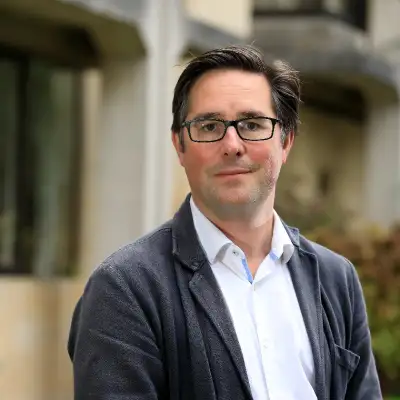
Today, my guest is William Whyte. He's a professor of social and architectural history at Oxford, and the author of the recently released book, The University: A History in Stone, Silk, and Blood, from Harvard University Press.
Rather than telling the history of the university chronologically, Whyte tells it materially, tracing the institution from its somewhat nomadic medieval origins through the stone buildings that first tied it to a single place, all the way to the concrete utopianism of the post-war expansion, and the silicon of our own digital age.
My conversation with William was wide-ranging and fun. Why did universities choose to settle down and become landowners in the first place? How did the acquisition of physical property enhance the university's power, control, and status? Why did concrete become, briefly, a material of utopian ambition rather than brutalist embarrassment? And what does the physical history of the university tell us about whether it can survive going fully online?
The book is an engaging one, and so too is its author. And so, without further ado, here's William Whyte.
William, thanks for joining us. Your book, The University: A History in Stone, Silk, and Blood, it's a history of universities of a sort, but it's not entirely chronological, right? It's structured around physical materials that impact the institution. What does the material history reveal that other approaches can't?
William Whyte: Well, my hope is it does two things really. The first is that it makes us think hard about what the nature of the university actually is, and to think about the ways in which the flows of resources through the university are, you know, connecting it to the world, and also helping it to define itself as separate from the world. And so in a sense that, I hope, enables us to think about what universities actually are and what they do.
And at the same time, I think the second thing is that the focus on the material exposes a kind of myth or fantasy that exists within university life to this day, which is the idea that somehow we can escape this materiality. That somehow if only we didn't have things, we would be free to think, we would be free to exist beyond flows of power, flows of money, and create a, a completely utopian environment. And what I want to do is to say, look, universities are important, universities are precious, but they're also inevitably part of the world.
Alex Usher: Well, that's an interesting question, right? Because you know, the, the big change in universities in the last century or so is really it's urban universities, right? I mean, we, we used to have this idea, particularly in North America, let's put universities away from big cities. Let's put them aside or, you know, in China, let's wall them off.
And yet now the big thing is you have to have an institution that's porous, that is, you know, permeable within the city. Do universities really want to be separate that way, do you think?
William Whyte: I think there's an inevitable tension within all institutions between those who really do want to exist beyond the world and, and those who are highly engaged with it. And actually existing beyond the world is not such a bad thing. Existing in a kind of special place where you can go away and think difficult things, existing in a place where you can say difficult things, I mean, actually that is what a university is for.
It needs to be somehow defined and separate, and even the most porous universities have to have that kind of capacity to, to defend their boundaries. But yeah, you're absolutely right. I mean, one of the things that certainly happened in the last few decades is a very self-conscious attempt to unbound the university.
And, you know, it's not a coincidence that that's been accompanied by a large number of people saying, "Well, look, the university's been corrupted. Look, the university's been bought. Look, the university's been taken over by business." And so, you know, that in some cases is certainly true. In other cases, that reflects, as I say, this, this fantasy that somehow we can escape connection with the world.
Alex Usher: At one point, I mean, at the very beginning, European universities were much less physical than they had, now, you know, as you point out, they were not quite nomadic institutions, but they, they had the, the potential to be nomadic. You could have an exodus from Paris to Oxford or you know, wherever.
And it wasn't until the later Middle Ages that universities began putting down real roots in the form of stone buildings. What caused that shift and what were its consequences?
William Whyte: I mean, it's absolutely right. I mean, the university in its earliest years, its great strength is its capacity to get up and go to seek better deals elsewhere, and that's why, you know, that leads to the creation of universities. I mean, that's why we have the University of Cambridge. It's a group of people trying to get out of Oxford for a better deal in an equally kind of damp place. But what causes the settling down of universities is a kind of threefold pattern.
I mean, the first is that the universities themselves can see the benefits of settling down. They can see the benefits of becoming landowners, of becoming you know, the landlords of, of tenants. They can see how their lives would be better, and also that the resources they need, the books they need actually do hold them down. They sustain them in place.
That's allied to a growing sense on the part of the rich and the powerful that sponsoring universities is a good thing, that they will, in their own way find a, a form of immortality by founding these institutions.
And thirdly, and, and I think just as importantly as both the sort of desire of academics to have a better life, the desire of funders to be memorialized throughout all time, is the desire to discipline people within the university.
I mean, we should be under no doubt that as soon as you build a building, that building is about control as well as about resources, as well as about memorialization. It's also about defining who's in and who's out. It's about ensuring the observation and hence the preservation of authority over those who are within that building.
Alex Usher: The university is a pretty fundamentally European concept, you know, as an organization, and I, I think you make it pretty clear in the introduction that you're not persuaded that parallel institutions like madrasas in the, Islamic world or Nalanda University in India and what was then the Buddhist world, were in fact proto-universities as they're sometimes portrayed.
What is it that you think is distinctive about universities, and why have they proved so popular around the world? How do they manage to spread if they're so distinctly European?
William Whyte: Yeah, I mean, I think the point I want to make is that all societies have a form, all cultures have a form of higher learning. It's just this is one of them. The university is a particular model of higher learning, and in fact it's kind of reduces the other institutions of higher learning if we just describe them as being the same as universities.
There are different models of learning. There are different models of institutionalization. I think the critical thing, the two critical things really about the university as it develops in the medieval West is first of all that these are a legal institution. These are a body of people who come together to form a corporation, a universitas which has legal personality, which can endure through time in a way that you know, other forms of higher learning often can't.
And the second is that it's a, a group of people who are able to determine the qualifications that are studied by everyone in it. So there is a, there is at the end, there's a process of matriculation, but at the end there's also a process of graduation. So you've got a clear kind of formalized process of becoming part of and then of proceeding to the higher level to graduating from the institutions.
And I think both those things gave it strength. The legal personhood gave it strength. The capacity to control who's in and what you need to study gave it strength to endure through time. I think, too, two other factors are important. The first is I think the materiality of the university, the fact that these institutions had their own homes, the fact that the impedimenta of universities are there gives a, a reason for the university to continue to exist.
I think at the same time because these institutions become so strongly allied to the state, what that means is that when those European states expand, when imperialism dominates the world in the 19th century, the university is then implanted across the globe.
Alex Usher: So it's just simply colonialism
William Whyte: It's a colonial... I mean, there's no way in denying that the university is to a certain extent a colonial institution, and that's again another reason for drawing attention to the fact that it is not the same as these other forms of higher learning. Because what happens is these other forms of higher learning are in some cases driven out of existence, in other cases are reinvented in the model of the university, and in other cases become more like the university in response to the success of, well, the dominance of the European model.
Alex Usher: So let's get back to that issue about the relationship with the state, 'cause I think you know, universities are, as you say, they value their autonomy very strongly, and they are, you know, as of the late Middle Ages, they have a physical presence. They have an estate that they can defend, if you will.
And of course, that's where you get all these, these issues about, you know, are universities separate from the state to some degree? Do they have the ability to punish their own students? I mean, in Sweden they were still executing students in the 18th century. But even until geez, just till a couple years ago in Greece, you know, there were rules about whether police could go into university campuses.
So, does the physicality of a university make it easier or more difficult to work with the state? You know, does the state get jealous about the privileges of universities? What's the tension there?
William Whyte: It's a fundamental tension that runs throughout university history and is sort of articulated, I mean, you're absolutely right, the boundaries of the university, the extent to which this is seen as inviolate, almost sacred space is wonderfully illustrated in Beijing during the Tiananmen Square Massacre where extraordinarily the police never enter Tsinghua, never enter the University of Peking.
You know, they remain separate and autonomous spaces throughout the whole process, and that tension is sort of brilliantly articulated in 19th century Germany. Well, what they do is they talk about the need for universities to be totally free, to have total freedom of thought, but because that is going to serve the interest of the state best.
And that, that's a problem that all, uh, governments have to wrestle with, is that universities can't really do their job unless they are, to a degree, separate from the state. They certainly aren't going to be able to do what the university from the 19th century comes to believe really is its job, which is new research, which is finding out new things unless they're able to operate to a degree independently from the state.
And yet, of course, the state is always worried about what's happening within the university. And I mean, we can see it to this day. I mean, even in, you know, ostensibly developed democracies, there's a tremendous worry about whether these places have become sort of factories of woke liberalism or whether they're becoming places where people are trained up to think the wrong thoughts.
Universities, I mean, that's why I think thinking about the university as a place is such a sort of fertile way of thinking about what the university actually is. It's about a distinct place, but it's a distinct place that's always been connected to and always is the outcome of a relationship with something beyond it.
Alex Usher: We're gonna take a short break. We'll be right back
And we're back. William, my favorite chapter is actually the last one, right? And so it covers the post-war world where universities, you know, that's where they really conquer the world. It's post-colonial, but post-colonialism, everybody still wants a university. Everyone wants more universities. And it happens at the time that concrete becomes a, a very important building material, right? And what's fascinating about concrete is the, in universities, is the extent to which this, you know, what's now a fairly derided material was associated with utopian visions of society and of knowledge.
Uh, we had Miles Taylor on the show a couple years ago to talk about the book that he and Jill uh, Palou did called Utopian Universities, right? That they're all... Here in Canada, we got Simon Fraser, we've got Trent University, you know, they're all over the place. Is that coincidence? Like, how did concrete become a utopian substance, I guess. Like, I'm still, like, as a, from the 2020s, that seems very odd. How did it happen?
William Whyte: I think it happens, it happens for two reasons, and one is to do with the way in which concrete is mobilized, especially in developing nations, especially in Africa. I mean, this is why I begin in Great Ife for, with the, the amazing university. You know, the most beautiful university in Africa it calls itself, which is a kind of symphony in concrete really. Or you could go to Mexico or you could go to, you know, Jerusalem or you could go to Brasilia. You know, in all these places concrete seems to be the modern and the modernizing form of building.
I mean, Simon Fraser, you know, the founding head of Simon Fraser very explicitly says this. You know, here is the architecture of the response to Sputnik. Here is, you know, this is how we're going to show how intensely modern we are. So it becomes symbolic in that way, and I think that's linked to the way in which architects conceive of it as a, a utopian way of building.
I mean, in some respects utopianism is a bit at a discount in the post-war world. It's, it sort of vanishes from a lot of people's lives because the Cold War is so scary, because the experience of war has been so awful. Architects are almost the only people who retain a form of utopianism, and the concrete enables them to do that. It enables them to imagine a wholly manmade, a wholly artificial an extraordinary form of building which is on the one hand intensely strong, on the other hand hugely sculptural and plastic. You can do almost anything with it. And so what they want to do is to build universities to demonstrate the power of concrete because they want to sell their utopian ideas to the students and to the state at the same time.
Alex Usher: Interesting. Obviously you had a number of materials that you covered in the book. Are there any that you think could have been added? Did you drop one or two on the way to a final draft? Or, or, you know, has any critical substance emerged since Concrete?
William Whyte: I mean, I think the... I mean, I, I dropped hundreds of them. I mean, I did think should I have one on wine? I did think should I have one on glass? Glass might have been fun. There's a lot of glass. Stained glass windows, glass laboratory instrumentation, all those plate glass buildings that are built in recently.
You know, there's a lot more excrement and urine in the book than I'd expected, but I thought that'd be quite an off-putting chapter title. I think the thing I probably should have done, I should have had the confidence to do what you know, what I originally thought is, you know, I have an epilogue to the book in which I sort of think about, you know, is the material university going?
Have we, you know, is the, is the form of university that we've inherited from the medieval past and that has evolved and created these extraordinary buildings and things across the world, is that going? And, you know, I probably should have called that epilogue Silicon. I mean, in some respects, you know, which would have been glass. Which would have enabled me to think a bit harder about the ways in which the modern technology is still based upon material forms even when its proponents like to hide that fact.
Alex Usher: Yeah. Well, I let... So just to continue on that, that note about your final I guess it's not a conclusion, but the final chapter there, you know, the parallel that you invite readers to make is, look, we started off with rootless universities and, you know, now we have online higher education, and that, which is not quite rootless, right? 'Cause it's still based in universities that have physical form. But can we imagine a world in which universities mostly discard their corporeal aspects and simply are non-tethered communities of the mind? Do universities need campuses?
William Whyte: I mean, my argument would be yes. My argument would be that it's hard to overturn the weight of history. It's also, more importantly, hard to downplay the importance of places as, as forums in which human beings interact with one another, and that that form of interaction is better, is privileged within an actual face-to-face encounter.
I think, though, you know, inevitably universities are going to be changed, are being changed by technology. They already have been. I think, you know, inevitably there are going to be those who push, the ed tech world pushes very hard for the idea that in fact this could all be done online. You know, there are certainly university provosts who would be more than happy if AI were to replace expensive and intractable academics as a, a medium for teaching.
And, you know, there is a sense, and I mean this comes back to the question you asked me a bit earlier, the university is only one model of higher learning. It doesn't have to be the only one model going on into the future. But will there always be universities? Will there always be campuses? Well, I think the interesting thing is that if you look at the world of technology, is that they build their own campuses. They are building environments that are in direct imitation of universities. They can see the value of these face-to-face bounded communities. If they can see it, then I think we should probably recognize that it is worth retaining
Alex Usher: Are there any materials you see on the horizon that might change the university again after silicon?
William Whyte: It's a really nice question. I mean, I'm not sure, I, I think what's going to be interesting about the universities in 50, in 100 years' time is both the engagement with technology, but also the fact that if universities in the form that we've known them are going to be maintained, what they're probably going to have to do is to rediscover some of the reasons why these buildings were built in the first place, why these things were put up in the first place, why these objects were assembled in the first place. And actually, that might mean rediscovering older forms of materiality rather than endlessly pursuing new ones.
Alex Usher: William White, thanks so much for joining us today.
William Whyte: Thank you. Thanks ever so much for having me.
Alex Usher: And it just remains for me to thank our excellent producers, Noah Arney, Sam Pufek, and you, our listeners and readers, for joining us. If you have any questions or comments about today's episode, please don't hesitate to get in touch with us at podcast@higheredstrategy.com.
Join us next week when our guest will be a longtime podcast invitee, Alma Maldonado-Maldonado from the Centro de Investigación y de Estudios Avanzados del Instituto Politécnico Nacional. She'll be joining us to talk about the online cheating scandal in the UNAM entrance exams that rocked Mexico for most of last summer.
Bye for now.
Listen to The World of Higher Education using one of many popular podcasting apps or directories.